


Discovering the Hidden Gems of Quilpie Region in Western Queensland

Outback Queensland has so much to offer with so much history to unravel from natural to early European through to first nation. I was originally heading further north but an unexpected detour pointed me towards Quilpie in the heart of Queensland’s outback.
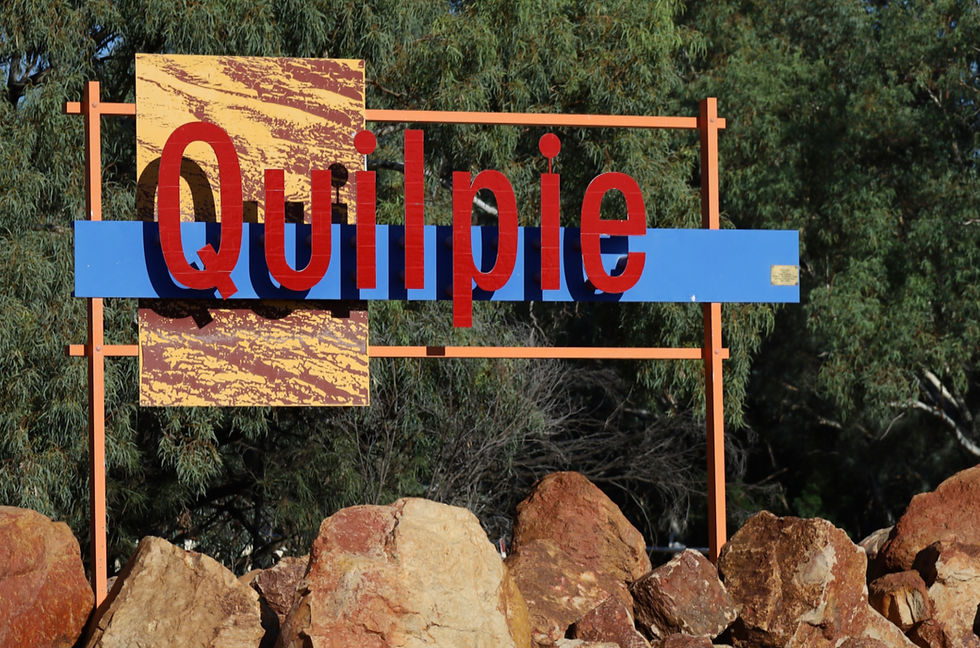
The town was gazetted in 1917 ( which makes it relatively young at 109 years old ), but surprisingly the surrounding channel country had been occupied since the 1860’s due to good areas of Mitchell Grass for grazing. Prior to European pastrolists moving through the area, indigenous groups occupied the area for nearly twenty thousand years. The Margany and Boonthamurra people roamed the arid floodplains between the Bulloo and Paroo Rivers. Quilpie’s name is derived from the Indigenous Margany word Quilpeta, meaning Stone Plover, a bird you would normally associate with far north Queensland, and with the shire covering nearly seventy thousand square kilometres which is equivalent to the size of Tasmania there’s plenty to see and do.
My first port of all was the Tourist office in the main street of town where not only you can find out all the shires info, but in the same complex they have several museums on site. When the Great Western Railway came to town in 1917 it changed the course of Quilpie’s history as prior to this there were only a few humpies around town.
Originally Adavale ( 100km to the north ) was considered the main centre but a last minute decision was made to take the rail line to Quilpie. There were grand plans to extend the line further west but was abandoned due to war time restrictions, thus making Quilpie - the end of the line. Out the back of the info centre the old rail station has been restored and moved on site for a rail display centre.
Also in the complex is a military history museum, a display on natural history, local art gallery and at selected times an outdoor night show highlighting the areas history.

Before venturing further out of town there’s a couple of significant places to explore including an Opal Alter in St Finbarr’s Church. It’s free to enter, to admire the alter and lectern made from locally found opal.
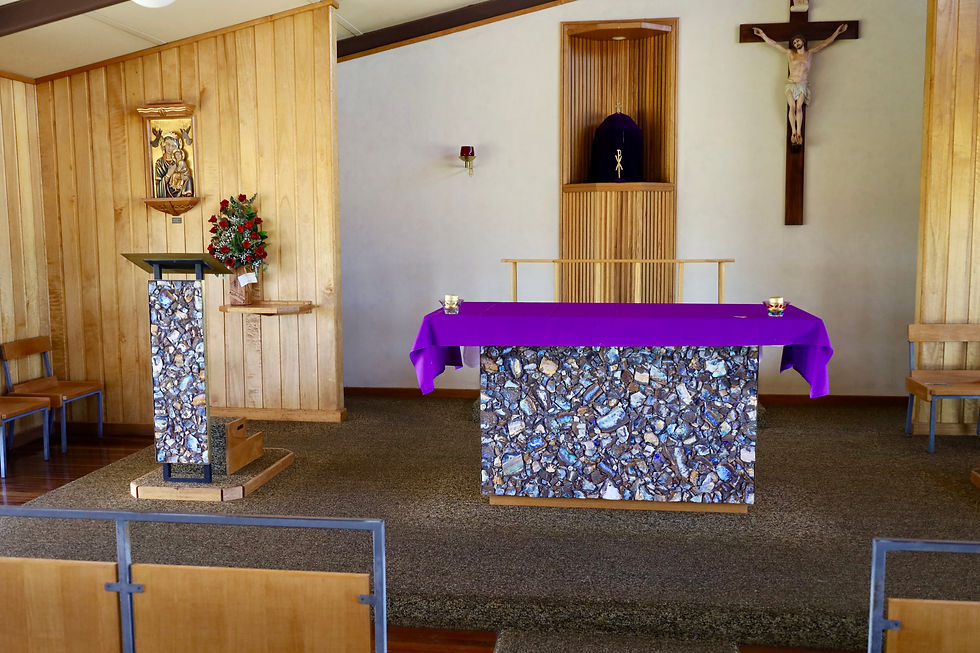
Quilpie is part of the western opal fields and is known around the world for its high quality boulder opal. There is a free fossicking site just near the airport where you don’t need a licence, but if you venture out to any of the major opal sites, you need to apply for a fossickers licence. I'm no prospector but did find a few colourful stones after some rain.

In 1926 the first brick building was established in town, known as The Brick, its been restored to its former glory inside and out with pressed tin ceilings, grand chandeliers and is classed as a historical significant building. The original timber Quilpie watering hole was burnt down in a fire, prompting a rebuild with bricks and mortar.

On the outskirts of town there’s a 2km nature walk along the Bulloo River where birds gather along the waters edge and where you can fish for Yellowbelly or hunt for freshwater Yabbies. In 1933 a bore was sunk for Quilpie’s water supply to the depth of 900m down into the great Artesian Basin, and can be found on the western side of town. The water comes out boiling hot and was used to generate electricity in 1935. Ironically houses around town have cold water tanks to cool down the water before being used inside.

After a day touring around town I headed just five minutes out of town to a 1000 hectare station stay called The lake, which dates back to the late 1800’s. With a permanent waterhole, Lake Houdraman attracts plenty of bird and animal life and is open to campers to experience station life.
Not only do they offer camping around the lake, but there’s private 4wd tours across the station where the owner shares stories and a rundown on station life managing sheep, cattle and their Kalahari red goats. They also offer a bathhouse where visitors can soak in mineral rich water while watching the afternoon sunset across the lake.

A popular natural attraction just out of Quilpie is Baldy Top Lookout, where you can scramble to the top for stunning views across the harsh landscape which is one of the most elevated points in south west Queensland. There’s caves to explore and plenty of viewing points around the base or the top of the lookout that has taken millions of years to form.

South of Baldy Top is Toompine Pub which is known as the pub without a town. It’s the last place open these days from a once booming opal mining settlement dating back to the 1890’s and was serviced by the Cobb and Co coach run, when it serviced the Dowling Track down to Bourke in NSW.

Beautifully restored it’s a popular stopover today for visitors and local station owners for a good pub feed and cold beer. There’s free camping at the pub too, if you happen to have a few too many. Out the back of the pub is Toompine Cemetery ( spelt Cemery ), it has a handful of headstones dating back to the same era.

To the west of Quilpie is Eromanga which is known as the furthest town from the sea and home to one of the largest Dinosaurs that roamed inland Australia, named Cooper. He was the largest Dinosaur that lived inland and is rated in the top fifteen in the world. It was 100 Million years ago during the Cretaceous period that our continent was covered by a shallow inland sea. Skeletor remains were found on a station and are now displayed at the Eromanga Natural history Museum. It’s a fascinating display and history lesson on what happened all those years ago, and the size of the Titanosaur bones are just staggering.

Outside the centre they have life size sculptures of a Sauropod and her two babies. Eromanga also has European history dating back to 1860, where there’s a town historical walk and they have one of Australia’s most prolific gas and oil basins covering over one million square km’s. Opal was found in the area and has some of the oldest mining areas dating back to 1888.

Basing yourself at Quilpie allows for exploring remote national Parks in the area too, but these are seriously isolated Parks where visitors need to be aware of extreme conditions. Hell Hole Gorge National Park, NW of Quilpie is a birdwatcher’s paradise with plenty of species spotted in the area.
The natural gorge holds water even when the surrounding area is in severe drought and is a magnet for different species of birds and the threatened Yellow Footed Wallaby. Visitors must stop at Adavale pub to sign in and out of the park due to its extreme remote location.

Further north of Hell Hole is the beautiful Idalia National Park covered in dense Mulga and home to seven Macropods. There are several walks to enjoy, a 4wd trip out to Murphys Rockhole where you’ll see plenty of wildlife and the stunning Emmet Pocket lookout, with endless views across distant Mulga forests. It also claims to be the furthest natural location in western QLD to see a Koala. Scattered through the park there are mustering huts, steam engine relics and heritage fence lines. To the NE of Quilpie is Mariala National Park which was once part of the Ambathala Pastoral Company who bred horses for the Cobb and Co company dating back to 1875. Covered with thick silver leafed Mulga Trees it’s now a safe haven for local birds and animals. These parks should only be visited in the cooler months are summer time temps are extreme and dangerous.
Quilpie is the perfect base for self drive exploring where you can head off into remote National Parks, explore vast landscapes and dig into the past of ancient dinosaurs. The whole shire offers unforgettable experiences with stunning station stays, grabbing a feed at one of the many unique pubs or just relaxing under the huge open skies soaking up the outback hospitality.
WHERE IS QUILPIE
Quilpie is 956 km due west of Brisbane on the Warrego Highway and is a popular stop over for travellers heading in all directions, also serviced by air twice a week. It’s a fairly remote part of outback Queensland but the town has basic services.

WHAT TO DO IN THE REGION
Surrounded by natural wonders, a dinosaur trail and National Parks, there’s plenty to see and do in the area. Further west from Quilpie is Eromanga where visitors can discover part of Australia’s ancient history at the Dinosaur centre. Quilpie is also known for boulder Opal and there’s plenty of spots to fossick around town. There are several tourist loops from Quilpie where you can do an outback pub trail, visit remote National Parks or pull up for a station camp around the region. The town has a modern caravan park and a supermarket for supplies. There are several walks around town and at the tourist centre there are museums to walk through.
OTHER ESSENTIAL INFO
Even tho there are basic services in the region, major towns are hours away so its best to come prepared especially if you visit outlying Parks and communities. The Quilpie Tourist info centre in the heart of town has all the up-to date information on local conditions throughout the shire. They can be found at 51 Brolga St, Quilpie or phoned on
(07) 46560540.


Comments