


Unveiling the Hidden Gems of Borroloola and Seven Emu Station on the Savannah Way

Updated: Feb 13
The Savannah way is a 3700km journey across the top of Australia through Queensland, Northern Territory and Western Australia. Now while this journey can be described as one of the greatest trips that we have to offer, there’s plenty of hidden gems within this trek. I was in the vicinity of Borroloola and decided to dig deep and really discover what was around the area. Unveiling the Hidden Gems of Borroloola and Seven Emu Station on the Savannah Way

My initial starting point was the Caranbirini Conservation area, 40km west of Borroloola, walking the Barrawulla Loop track past the water hole and up the lookout to view the sandstone pillars that are 25m high and make up the Lost City.
Caranbirini Conservation Caranbirini Conservation
This area has been home to the Gadanji people for generations where they hunted for traditional food around the Caranbirini Waterhole and on country, they call this place Garambarini. It’s an impressive site viewing both the water hole and pillars from the lookout which are part of the dreamtime of the area. No camping is allowed in the reserve so I decided to head towards King Ash Bay just out of Borroloola for a few nights.

King Ash is a 500 acre block on lease from the NT Government run by the KA fishing club and is on the bank of the McArthur River. Over the years they have made themselves a self sufficient town generating their own power, own water source, they offer fuel food and some of the best camping you’ll come across win the area.

King Ash is not only Barramundi heaven but many other species are caught throughout the year in the maze of waterways that head out into the Gulf and the Sir Edward Pellet Group of islands.

The township of Borroloola is 50km away and was once regarded as a frontier town, now is regarded as the Capital of the Gulf of Carpentaria. Borroloola was settled and declared a town by europeans in 1885, but local indigenous have been there long before it was named, in fact the Garrwa name for the town is Burrulula.

Cattle Drovers followed the Coast Track which passed Borroloola as they moved cattle from Queensland towards new stations in the NT and the Kimberley. This track was originally a well worn Aboriginal track that they used for many generations as a trading route.

There’s plenty of culture around town and visitors can checkout the Art Centre that produces vibrant contemporary paintings, prints, jewellery and traditional items by many local artists. Just up the road is old Police Station, now turned into a fascinating museum which is listed by the National Trust of the NT. Here you can spend time exploring a stack of history, relics and paraphernalia that has been collected. In fact the building itself was constructed in 1886 when Borroloola was just a drovers camp and river port for the north. David Attenborough visited the area way back in 1962 to shoot a documentary on hermits who had cut themselves off from the modern day back then. The film was about Old Australia from 1860 and was to highlight the boom and bust of pastoral and mining life, plus human conditions.
Leaving Borroloola I jumped back onto the Savannah Way and headed east for Seven Emu Station. Now the Savannah way is known to some as being a horrid dirt road, but to be honest its all about preparation and driving to conditions.

I’ve driven this road multiple times and love the sheer rawness of the area, the dusty dirty landscape but beauty in the colour contrast. There are several river crossings along the way and depending on the time of year and wet season the depth will vary. As for nearly all patches of water in the top end, wouldn’t recommend swimming due to the chance of crocs.

The turn for Seven Emu station is at the Foelsche River crossing where its still another 20km to the stations gate after then crossing the Robinson River. Upon arriving I was greeted by forth generation family member Merissa who looks after the camping side of things.

The story goes that back in 1953 Willie Shadforth bought the property for cash after years of hard work as a drover and livestock trader. The Shadforth’s are Garawa people who have been in the gulf country for many generations. Seven Emu partnered with another station next door and they became the first privately owned nature reserve in the Gulf of Carpentaria, even their own cattle are kept out of the conservation zone. I was told that it was called Seven Emu as when explorer Ludwig Leichhardt was here in 1844 and they shot Seven Emu’s for a feast after a hard day exploring.

After signing into and organising a campsite, Merissa is all to happy to give you a rundown on the stations history, her families involvement and the Aboriginal cultural side of things. They offer several cultural and bush tucker tours around the wildlife sanctuary led by Frank, Merissa’s father. There are three different camping sections including stockmans near the office, the clifftop and out at the boat ramp. I was lucky to snare a Clifftop site which had its own shelter and unbelievable views to the Robinson River and across the plains to the west.
During the day it was fascinating watching the crocs cruise the river, the bull sharks attacking the mullet and the birdlife flying in and out. During the night I could hear the boofing of the Barra smashing the waters surface.

Marissa gives everyone a property mud map and explains the self drive 4wd tracks that you can do out to Shark Creek and the boat ramp which takes a good hour to the furthest point.
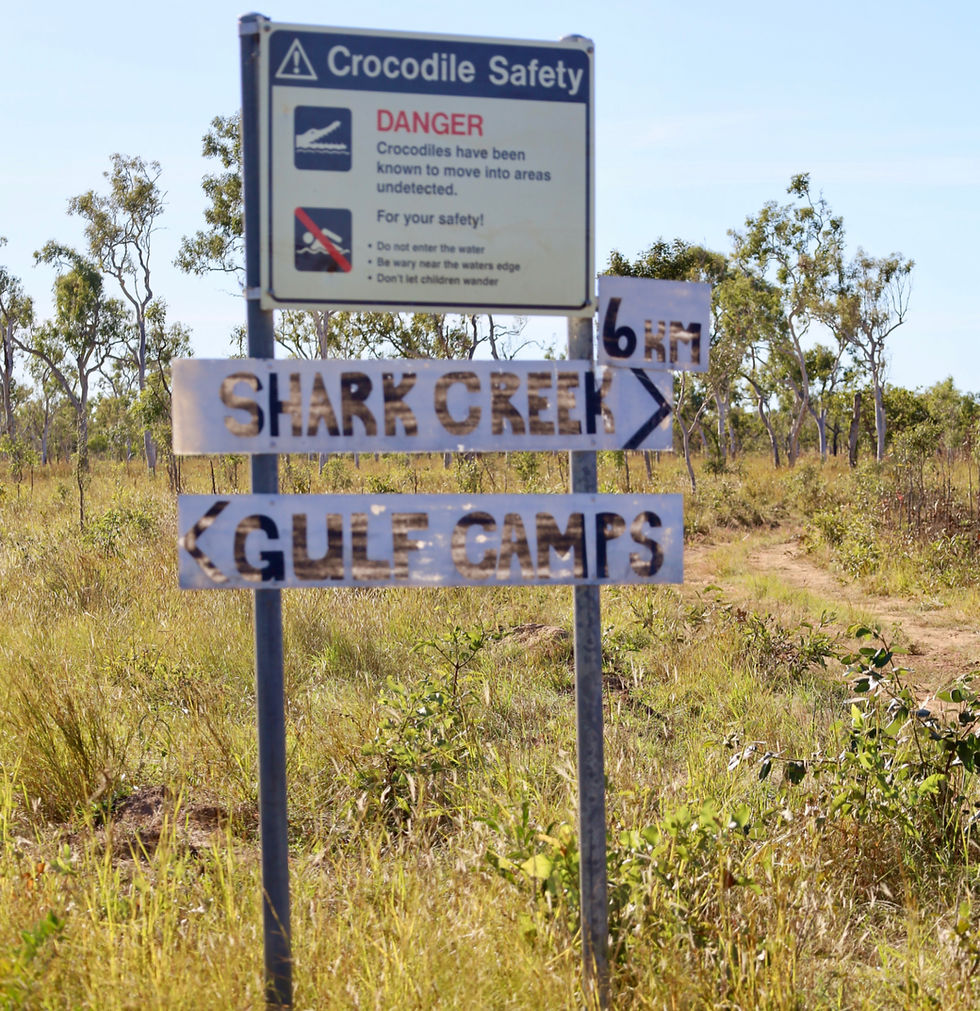
Camping at these points are primitive and you need to be self sufficient as it's a long way back, but if your towing a boat these are the perfect places to launch from and target the huge variety of fish that frequent the gulf and river system.
Woolgoolgaoffroad at Seven Emu station Woolgoolgaoffroad at Seven Emu station Woolgoolgaoffroad at Seven Emu station
Seven Emu is making a name for its self as a go to destination in the Gulf, but it’s also a working organic cattle station that covers 4300 square kilometres, has 55km of coast line frontage and nearly 50km of river frontage. When I was there, they were busy mustering and moving cattle to different parts of the station, so there was plenty of movement with choppers and stockmen. If your a keen fisher person, birdwatcher or just after some solitude for a few days, Seven Emu needs to be on your bucket list when crossing the Savannah Way.

WHERE
Borroloola is on the Savannah Way in the NT in the Gulf of Carpentaria, with Seven Emu Station a further 100km to the east. The Savannah way is a 3700km epic road trip through two states and a territory across the top of Australia. Seven Emu station is a forth generation traditional owned family business, operating as an organic cattle station, tourist destination and wildlife sanctuary.

WHAT TO DO
Around Borroloola there are natural wonders such as the Caranbarini Conservation area but also plenty of history and cultural experiences. At Seven Emu station, patrons can relax at one of their remote campsites, fish for one of the many species in the nearby Robinson River or indulge in a Aboriginal experience with one of the family members on the station.
Woolgoolgaoffroad at Seven Emu station cliff camp Woolgoolgaoffroad at Seven Emu station Woolgoolgaoffroad at Seven Emu station
OTHER INFO
Borroloola has basic services, fuel and supermarket and its best to top up with everything while in town. Seven Emu is remote and visitors need to be self sufficient, they do sell fuel and ice. Seven Emu station can be contacted through their website at www.sevenemustation.com.au or 08 89759904.
Woolgoolgaoffroad at Seven Emu station Woolgoolgaoffroad at Seven Emu station Woolgoolgaoffroad at Seven Emu station


Comments